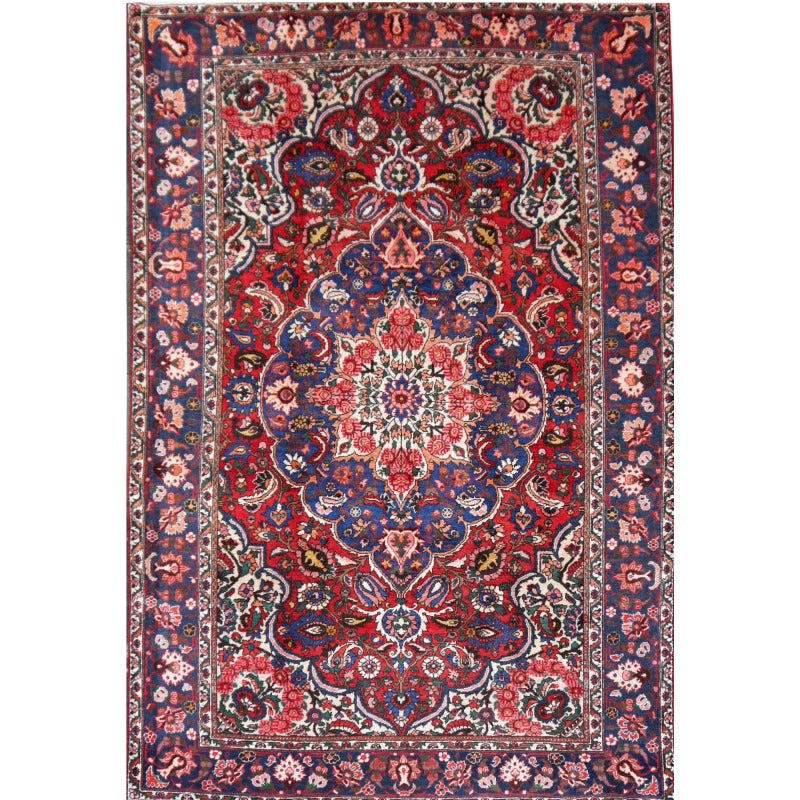
Bakhtiari Persian Tribal Rugs


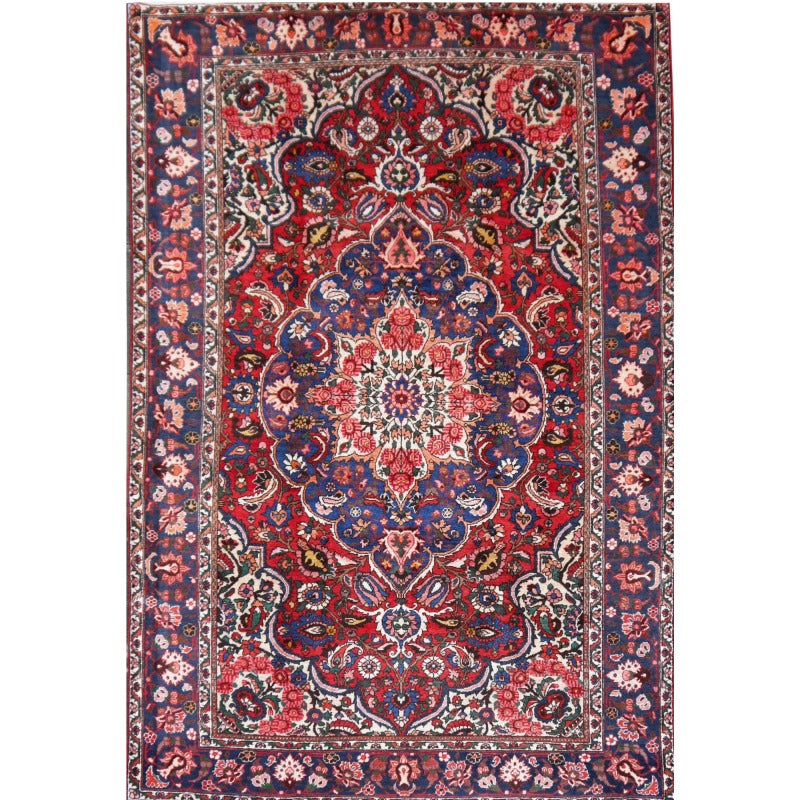
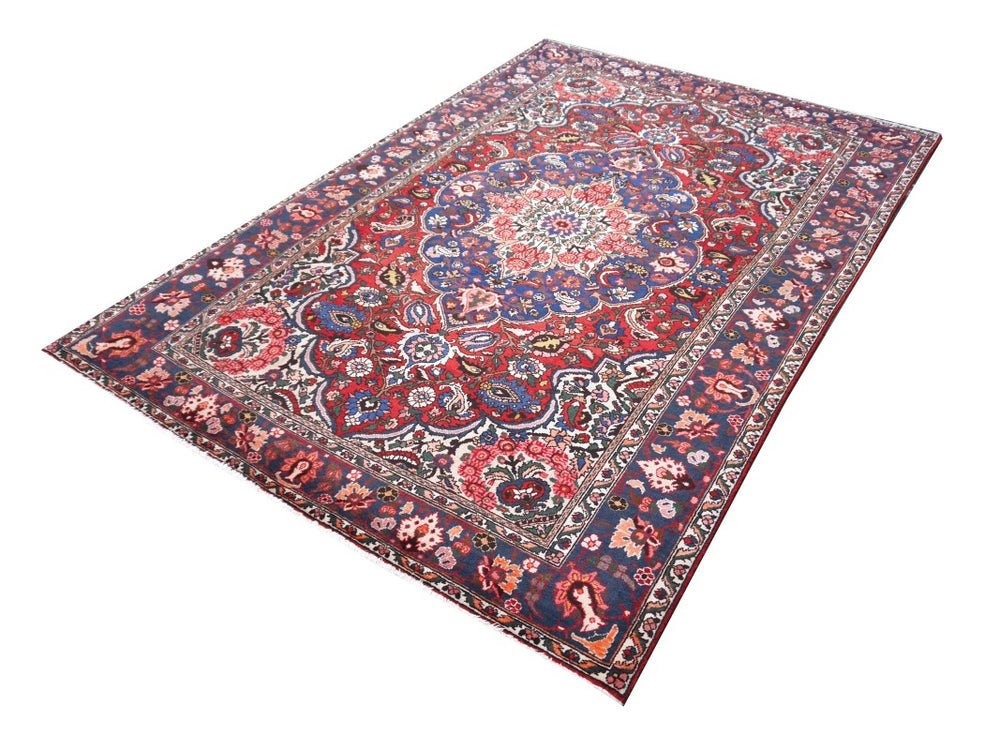
Bakhtiari Rugs — Garden of Paradise from the Zagros Mountains
“Woven by the warrior-poets of the Zagros: a paradise garden underfoot, lit by mineral pigments and the wool of mountain sheep.”
The Bakhtiari People — Heritage of the Zagros
The Bakhtiari (also spelled Bakhtiar, Bachtiari or Bachtiar) are one of the largest and most influential nomadic tribal confederations of western Persia. For centuries they have moved between summer and winter pastures across the Zagros mountains, weaving carpets that record the seasons, the gardens of their valleys and the spiritual cosmos of their poetry.
The heart of Bakhtiari rug production lies in the Chahar Mahal region, around the towns of Shahre-Kord, Saman, Boldaji and the historically important market town of Isfahan. Detailed technical and historical analysis is documented in the Jozan Carpet Encyclopedia, a leading authority on Persian provenance.
The Char-Bagh Design Language
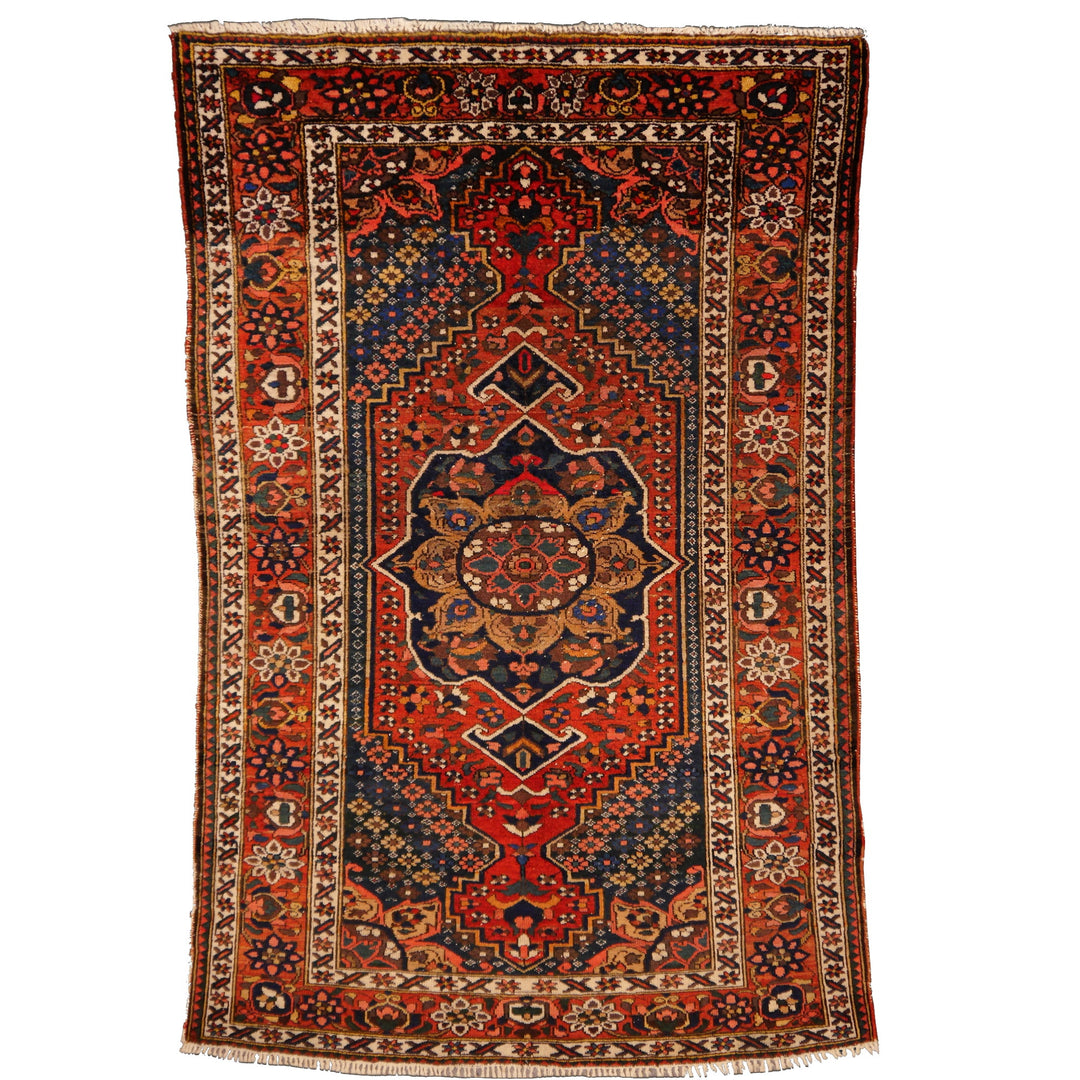
The most iconic Bakhtiari composition is the Char-Bagh (“Four Gardens”) — a grid of square or diamond compartments, each filled with stylised cypresses, weeping willows, blossoming fruit trees and birds. This pattern translates the Persian paradise garden into a textile, with each compartment a private courtyard of beauty.
Other classic motifs include:
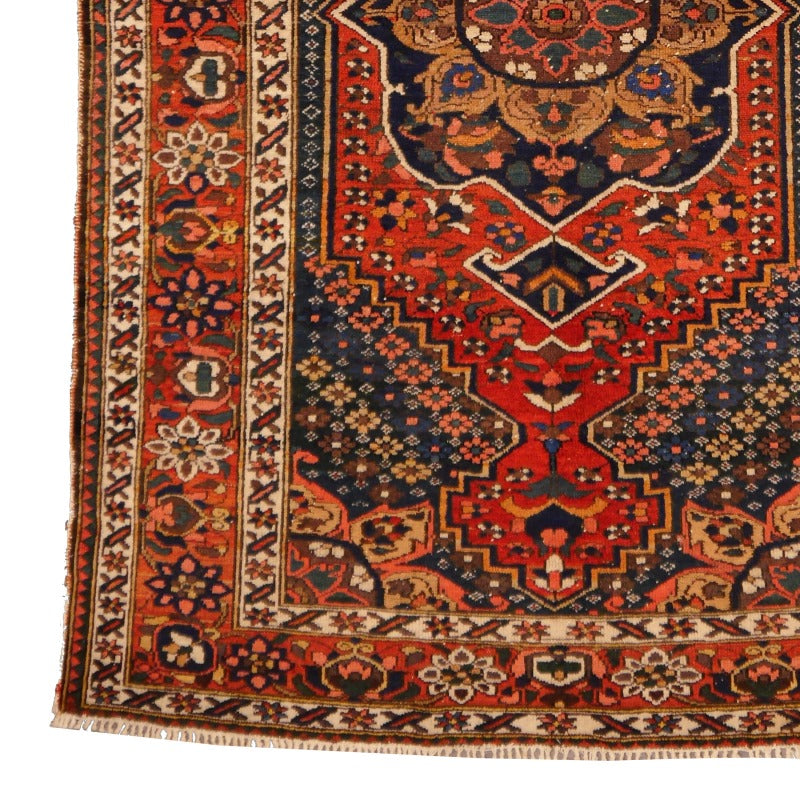
- —Central medallion with floral pendants — the urban refined variant
- —Tree of Life compositions — a single sacred tree filling the field
- —Khesti (brick pattern) — the framed garden compartments
- —Herati and Boteh — fish-in-pond and paisley fillers
Construction & Technical Profile
- •Knot density: from approx. 90,000 knots/m² for tribal weaves up to 500,000 knots/m² for fine workshop pieces.
- •Antique pieces: wool foundation (warp and weft) with wool pile — the purest expression of tribal weaving.
- •Vintage and modern pieces: cotton warp, cotton or wool weft, wool pile — more refined urban execution.
- •Pigments: mineral and vegetable origin (madder root for red, indigo for blue, walnut and pomegranate skin for browns and golds).
- •Knot: predominantly the asymmetric Persian knot.
Sizes — From Tribal Mats to Khan Carpets
Bakhtiari rugs are most commonly woven in the formats 5 × 3 ft (150 × 100 cm), 7 × 5 ft (200 × 130 cm), 10 × 5 ft (300 × 150 cm) and 10 × 7 ft (300 × 200 cm). Larger pieces between 14 × 10 ft and 20 × 16 ft are rare and were historically woven for the tents and palaces of the Bakhtiari Khans — these oversized weaves are still traded in the market under the dedicated name Khan carpets.
Why Choose a Bakhtiari from the Djoharian Collection
- —Curated provenance: every piece is selected for genuine tribal authenticity, design clarity and structural integrity
- —Label STEP Fair Trade partner: fair wages, no child labour, responsible production
- —Professionally cleaned & restored by our master craftsmen before delivery
- —50+ years of Djoharian expertise — since 1967, with roots in the Grand Carpet Bazaar of Tehran


